
A lasting repair
Repair is appropriate when the problem is defined, the surrounding material still has useful life, and correcting that area will honestly protect the home.
Services
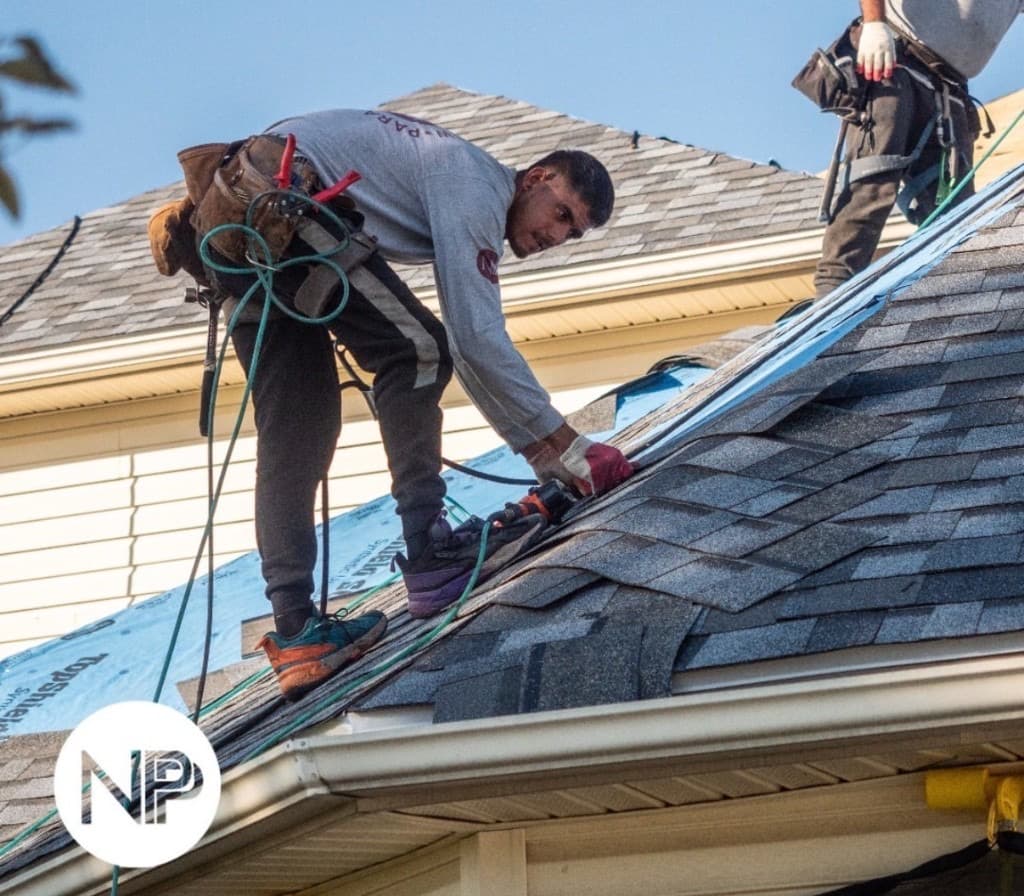
Targeted work for leaks, damaged shingles, flashing and storm-related issues — when repair is the honest solution.
A missing shingle, failed flashing or open penetration can let water into the underlayment and deck. New Paradigm Projects evaluates whether a repair will last or whether the surrounding system has already reached the point of replacement.
Not every roof can or should be repaired. That judgment is made after inspection — based on age, how widespread the damage is, and whether the same leak has returned.
Repair is appropriate when the problem is defined, the surrounding material still has useful life, and correcting that area will honestly protect the home.
Repeated leaks, many scattered failures, advanced age, or storm wear across the field can make another repair a short delay rather than a solution.
Document the leak path and surrounding condition.
Determine whether repair is appropriate or if replacement should be discussed.
Explain findings and options in plain language.
Confirm materials, access and timing if repair is approved.
Address the defined problem without disturbing sound portions of the roof.
Confirm the work, cleanup and remaining questions.
The opening is identified — flashing, a shingle, a penetration or storm damage.
Repair is recommended only when it will last. If not, replacement is discussed.
Access, landscaping and occupied space are planned before work starts.
Matching materials and finished details at transitions and penetrations.
The corrected area is explained and remaining questions are answered.
A small opening rarely stays small. Water can wet underlayment and deck, encourage mold, and in some cases invite pests. Interior finishes and insulation can be damaged long before the roof looks “failed” from the street.
Ignoring leaks can also raise the cost and scope of later work. The earlier the path is found, the more likely a targeted repair remains honest. Left alone, the same house may later need a larger restoration.
Where water is entering, how it travels, and whether one defined detail can be corrected.
Whether neighboring shingles, flashing and underlayment still have useful life.
Soft spots, staining or prior repairs that suggest the problem is larger than the surface.
Whether the issue is a recent weather event or the natural end of a system.
Curl can come from age, heat, moisture or an installation that is already tired. It is a reason to inspect — not an automatic verdict that the original work was wrong.
Growth holds moisture against the covering. Granules in gutters after rain can mean the weather surface is wearing. Neither is a DIY scrape-from-a-ladder job.
Many leaks can be repaired when the opening is localized. Recurring leaks in several places often change the conversation to replacement.
Yes. Missing or wind-lifted shingles expose underlayment and fasteners. That is a common reason to request inspection quickly.
As soon as it is safe to do so. Active interior leaking is a reason to call 301-200-9223.
Moisture has reached living space. The stain does not tell you the repair until the roof is evaluated.
Yes. Wind and hail can open the covering without an obvious interior leak the same day.
No. Repair is recommended only when it is a lasting solution — not a short delay.
A dry, well-finished roof supports the home. We do not quote appraisal numbers. We focus on stopping water and explaining the honest next step.